
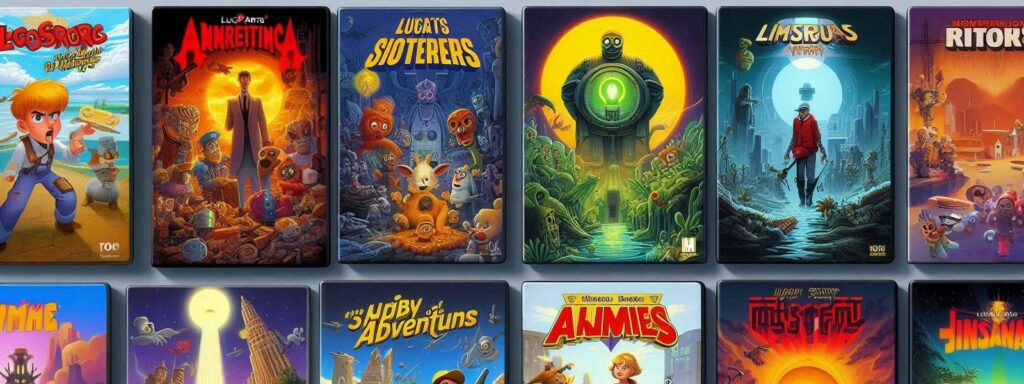
LucasArts’ journey started in the mid-’80s, back when it was known as Lucasfilm Games. Founded by George Lucas, the studio initially produced games that were a bit all over the place genre-wise. But things began to change once they found their footing in the point-and-click adventure world. It was a wild new frontier for storytelling and player interaction at the time.
Early inspirations for these games included classic literature, pulp adventure stories, and a heavy dose of cinematic flair, courtesy of Lucas’s influence. You’d see a blend of humour, intriguing narratives, and problem-solving that made the games more than just click-through experiences. These weren’t just games; they were interactive stories you got to be part of.
The real game-changer was LucasArts’ SCUMM engine, short for Script Creation Utility for Maniac Mansion. Developed by Ron Gilbert and his team, SCUMM allowed for more complex game mechanics and paved the way for a slew of iconic titles. It was a big leap forward, letting developers focus on creativity rather than coding headaches.
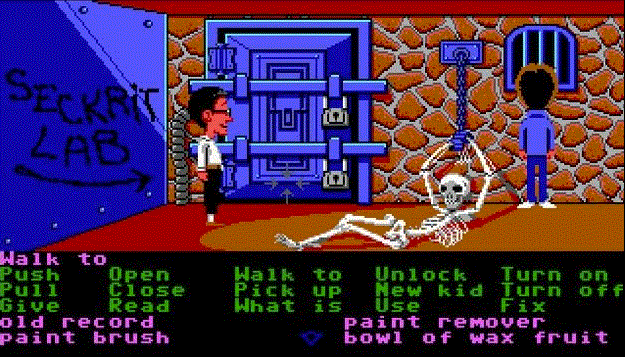
The launch of Maniac Mansion in 1987 was nothing short of revolutionary. With its quirky characters, offbeat humour, and multiple possible endings, it set a new standard for the genre. Players were hooked. Maniac Mansion didn’t just have you solve puzzles; it pulled you into a world where your choices truly mattered. This was the seed that grew into an entire genre-defining library of games for LucasArts.
The Golden Age: Defining Games and Innovation
LucasArts hit their stride in the 90s, pumping out classic after classic. The Secret of Monkey Island in 1990 kicked off what many consider the golden age. This game, with its witty dialogue and clever puzzles, set a new bar. You played as Guybrush Threepwood, a wannabe pirate with a knack for getting into ridiculous situations. The humour was sharp, and the story was engaging, making it an instant hit.
Another gem from this era is Sam & Max Hit the Road. Based on a comic book, this game introduced players to a canine detective and his hyperkinetic rabbit partner. The bizarre characters and offbeat humour were a hit, and it further showcased LucasArts’ knack for unforgettable storytelling.
Humor and storytelling were LucasArts’ secret weapons. Their games weren’t just about solving puzzles; they were about immersing the player in a richly detailed world. Each title was packed with memorable characters, quirky locations, and dialogue that was genuinely funny. It created a unique gaming experience that was hard to find elsewhere.
Technological advancements also played a key role in their success. By constantly refining the SCUMM engine and experimenting with new technologies, LucasArts managed to keep their games at the cutting edge of what’s possible in gaming. Each game felt like an evolution, pushing the boundaries of what point-and-click adventures could be.
Voice acting brought another layer of immersion. Memorable characters like Murray the Demonic Skull in the Monkey Island series came to life in a way that text alone couldn’t achieve. This era of games showed how voice talent could elevate a game, making interactions more engaging and characters unforgettable.
Challenges and the Decline of Point-and-Click Games
Entering the 2000s, the gaming landscape started to shift dramatically. New genres were emerging, and player preferences were evolving. The once-dominant point-and-click adventure genre began to face some serious competition. Real-time strategy, first-person shooters, and RPGs started to gain traction, pulling attention away from adventure games.
LucasArts found itself navigating choppy waters during this time. The studio’s focus shifted toward 3D graphics and more action-oriented titles. Games like “Grim Fandango” and “Escape from Monkey Island” did bring 3D into the mix, but they lost some of the charm that defined the earlier 2D titles. The intricate hand-drawn art and simpler mechanics gave way to more complex animations, but not all changes hit the mark with fans.
The market was evolving fast, and LucasArts struggled to keep up. The rise of consoles also impacted the genre. Point-and-click adventures were traditionally PC games, and the console market demanded different gameplay experiences. This shift meant that many traditional adventure games were seen as niche or outdated by a broader audience.
By the mid-2000s, LucasArts faced tough decisions. Internal changes, including shifts in leadership and business focus, added to the challenges. While the studio continued to try different approaches, none quite recaptured the magic of their earlier works. With dwindling interest and sales, the focus moved away from point-and-click titles entirely.
In 2013, the gaming world felt a significant blow with the closure of LucasArts. Known for their trailblazing efforts, the end of LucasArts marked the close of an era for many fans. The closure was a stark reminder of how quickly things can change in the gaming industry. Despite these challenges, the legacy of their earlier work remained, offering lasting inspiration for future developers.
Legacy and Influence: LucasArts’ Enduring Impact
Even though LucasArts is no longer around, its influence is deeply felt in the gaming world. Indie developers have picked up where LucasArts left off, creating new point-and-click adventures that draw heavily from those classic titles. Games like “Thimbleweed Park” and “Broken Age” are love letters to the genre, showing that the spirit of LucasArts is alive and kicking.
Modern developers often cite LucasArts as a key inspiration. The charm, humour, and storytelling that defined those early games continue to shape new titles. Whether it’s the quirky dialogue, memorable characters, or intricate puzzles, the fingerprints of LucasArts’ design philosophy can be found everywhere.
Nostalgia plays a huge role in the continuing fascination with these classics. Even today, gamers seek out the old LucasArts titles for a trip down memory lane. With digital distribution making these games more accessible than ever, a new generation gets to experience the magic. Remasters and re-releases have done a great job of updating the visuals and interfaces while keeping the core gameplay intact.
The cultural impact of LucasArts’ games can’t be overstated. They helped cement video games as a legitimate storytelling medium. Titles like “Monkey Island” and “Day of the Tentacle” are studied for their narrative techniques and innovative game design. These games laid the groundwork for how interactive stories could be told, influencing everything from indie projects to big-budget productions.
LucasArts may be gone, but its legacy lives on. The studio’s games continue to inspire, entertain, and teach valuable lessons about storytelling and design. For fans old and new, LucasArts’ point-and-click adventures are timeless classics, offering a unique blend of humour, puzzle-solving, and narrative depth that’s hard to find in today’s gaming landscape.